From the Mazomanie Historical Society
Mazomani – His Recorded Words
By Frank Wolf
The village of Mazomanie was named after the Wahpeton Dakota Sioux Indian leader named Mazomani. His name in the Siouan language means Walking Iron or Iron Walker. The village was named Mazomanie when it was platted on July 5, 1855.
When Mazomani went to Washington in 1858 to help negotiate a land cession treaty, he made some speeches, which were translated and recorded. The following were during deliberations with Commissioner Mix on transferring part of their reservation land to the Government. Iron Walker or The Man Walking on Iron (Mazomani) spoke eloquently for the delegation, saying:
“My father, when I met my great father, I spoke with one tongue and not two. That paper said that it expressed the wishes of the Sissetons and Whapetons bands of Sioux, but this is not so. Nobody knows anything about it; and I want to say something more. In regard to separate farms that is the wish and desire of all. I was glad when I met the President the other day, and I thought when I saw him, I was in the presence of the Great Spirit, and believed he would do something good for us – something which would make us prosperous and happy. That is the reason, father, I have met you here on this ground today. I don’t want to do anything about a treaty at all. We want farms. There are some things talked about which I like much and others which I do not, and that is the reason I speak to you. I am very sorry to hear that you are going to split our land and leave a part on one side of the River and the balance on the other; and give some of it on the North of the River to white people. You know there are bad white people, and you pretty well understand how the red people are. When white people bring it, they will drink bad water and when they do it, they act badly, and scare the women and children. Now you said we should have land on both sides of the River, I should have been glad, and would like to have a long talk some day or another. I would like to know how much you intend to give each family”
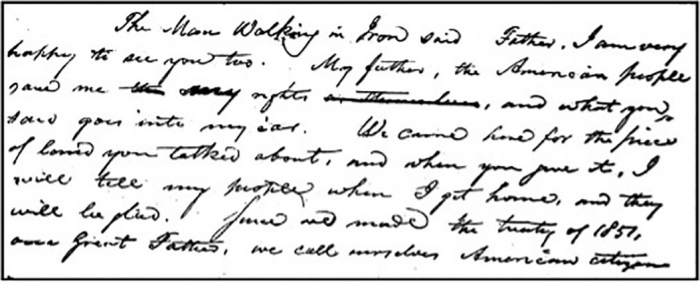
Later that day he spoke again:
“Father, I am very happy to see you too. My father, the American people gave me my rights, and what you said goes in my ear. We came here for the piece of land you talked about, and when you give it. I will tell my people when I get home and they will be glad. Since we made the treaty of 1851 with our Great Father, we call ourselves American citizens and feel that we are a portion of the American people and therefore determined to do right towards them in our dealing and intercourse. Last year Inkaputah killed some of your people, and this man (pointing to him) went out and brought in one of the prisoners. This father is the man that caught him. We acted as the friend of the Americans and intend to do what they tell us. When we came here, we expected to do business with our Great Father, and hope he will listen to what we have to say. Since we made the treaty of the Traverse de Sioux, we have lost a good deal of money which we ought to have got; and when we came here to inquire about it, we did not think we would have had to stay so long. We wanted to get through quick and go back and plant. I hope father, you will not delay us any longer. Since we came here, we have been informed that the Yankatoana and Tetons are collecting near our Reserve in great numbers; and as we do not know what they intend to do, we want to go back and protect our families. As they have a large force, they may destroy our crops, beg or steal our houses and travel all along the Minnesota River destroying and committing depredations as they do. We hope our Great Father will stop them, and prevent them from injuring us.”