From the Mazomanie Historical Society
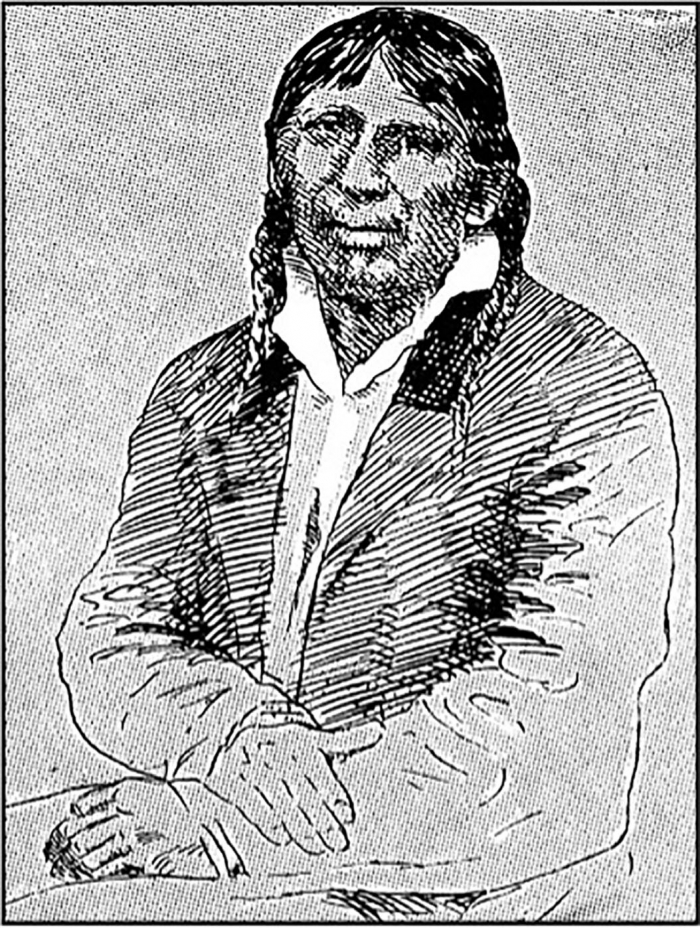
Mazomani – Visited Mazomanie
By Frank Wolf
The village of Mazomanie was named after the Wahpeton Dakota Sioux Indian leader named Mazomani. His name in the Siouan language means Walking Iron or Iron Walker. The village was named Mazomanie when it was platted on July 5, 1855.
Mazomani was a member of the 1858 Washington DC Treaty delegation and spoke well asking for justice for his Dakota people and that they be treated fairly by the government. The delegation traveled to Washington to negotiate and to see the President. They traveled by train and went through Mazomanie on the trip. The return trip was by steamer through the Great Lakes.
A delegation of leaders of the Upper Sioux (Wahpeton and Sisseton) and of the Lower Sioux (Mdewakanton and Wahpekute) was assembled for the trip. The object was to sign treaties that would untangle the question of Indian title to their land and, though the Sioux did not know it yet, would see them give up half of the reservation left them by the 1851 treaties of Traverse des Sioux and Mendota — the rich, ten-mile-wide strip on the north side of the Minnesota River.
The full delegation arrived at McGregor, IA on March 9, 1858. They had traveled by horse and wagon to that river port. After ferrying directly across the Mississippi River, the entire group entrained at Prairie du Chien, Wisconsin, for Chicago. The new rail line had only been completed to Prairie du Chien eleven months earlier; the first regular scheduled train arriving there on April 15, 1857. This new rail connection saved them twenty hours travel time and also saved the government subsistence money for the entire delegation of $2.50 per day per person. The delegation arrived in Chicago on March 11.
This timetable means Mazomani rode the train through Mazomanie on Wednesday, March 10, 1858. Did Mazomani understand he was traveling through Mazomanie? Did Mazomani know that the Village had been named after him? Did Mazomanie railroad station agent JB Stickney or Hercules Dousman have a special welcoming committee or other acknowledgement of the occasion. As the practice in those early days the train would have stopped for a meal at the Mazomanie eating house associated with the depot. Then Mazomani most likely would have gotten off the train and walked within Mazomanie on that day. Did Mazomani make a speech or have an opinion of this newly established village? What did he think of this frontier town? Was the visit event documented? Research has found nothing, except the village transit did occur.